Interim results from the public consultation survey
More than 730 emails, surveys and map comments were received during the 6 week public consultation on the draft Local Nature Recovery Strategies for West Sussex, East Sussex and Brighton & Hove.
Two reports (one for West Sussex, and one for East Sussex and Brighton & Hove) will be published here in February 2026 to present and address this feedback in detail.
In the meantime, a snapshot of results from the 303 consultation surveys is below. Note, this shows a combined view of both LNRS areas, whereas the reports will separate them out. The reports will also include feedback from emails and map comments.
Who completed a consultation survey?
Of the 303 respondents:
- 67% - Residents or members of community groups/voluntary organisations
- 14% - Nature and environment sector
- 8% - Public bodies (such as parish or district councils)
- 6% - Farmers, foresters, landowners or land managers
- 3% - Other
- 1% - Businesses
- 1% - Students
Responses came from all 12 Sussex district and boroughs as well as Brighton & Hove. We also heard from those who do not live in Sussex but work there, such as national environmental organisations.
Awareness
- 61% had heard about the strategy before public consultation, 5% weren’t sure and 34% had not.
- 77% felt they have a good understanding of the purpose of Local Nature Recovery Strategies, 18% weren’t sure and 5% do not.
- 52% had participated in some way e.g. by watching a webinar, taking a survey, visiting the website, receiving a newsletter etc
Format and legibility
How easy to read, clearly laid out and visually engaging respondents found LNRS documents and interactive Local Habitat Map.
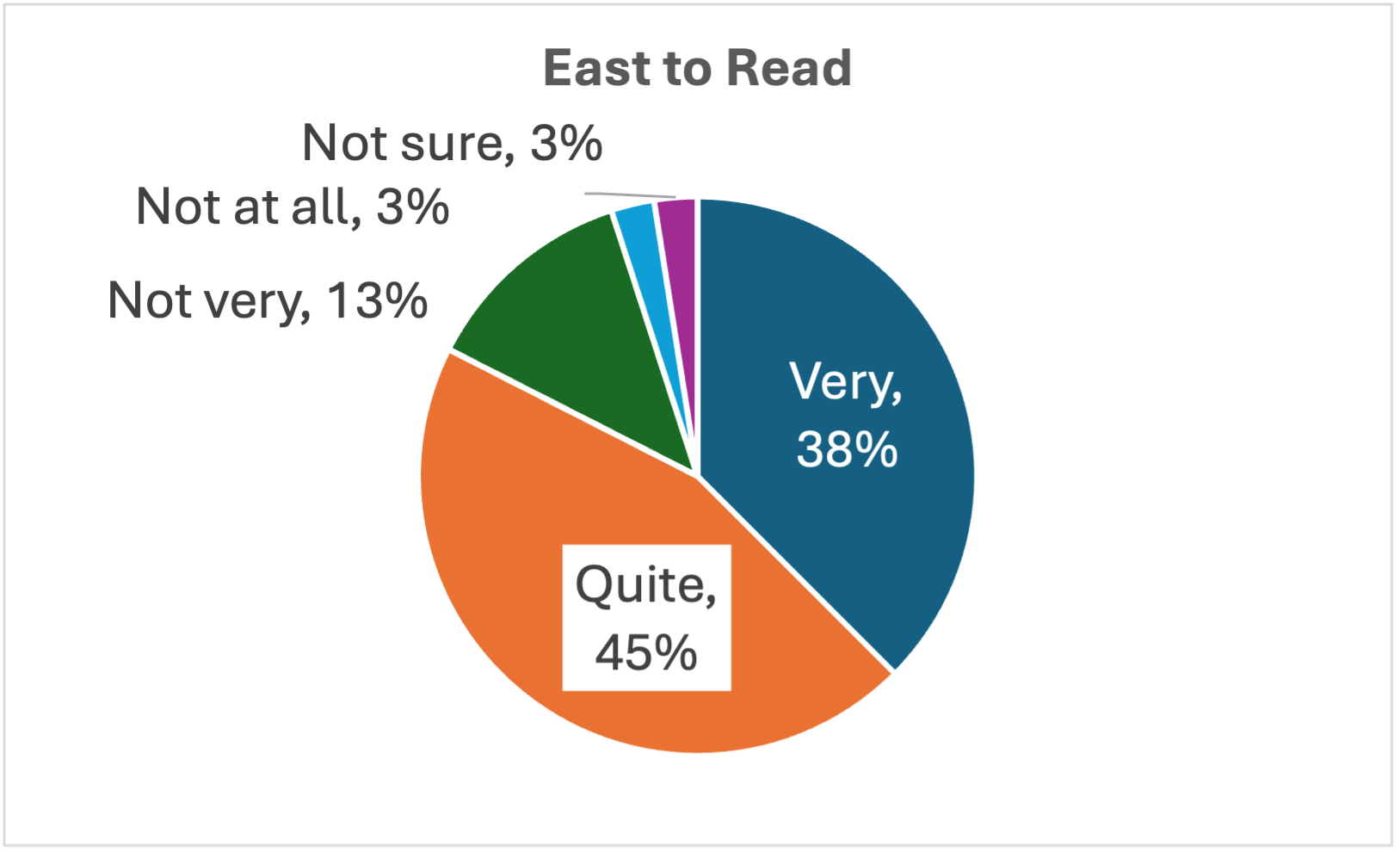
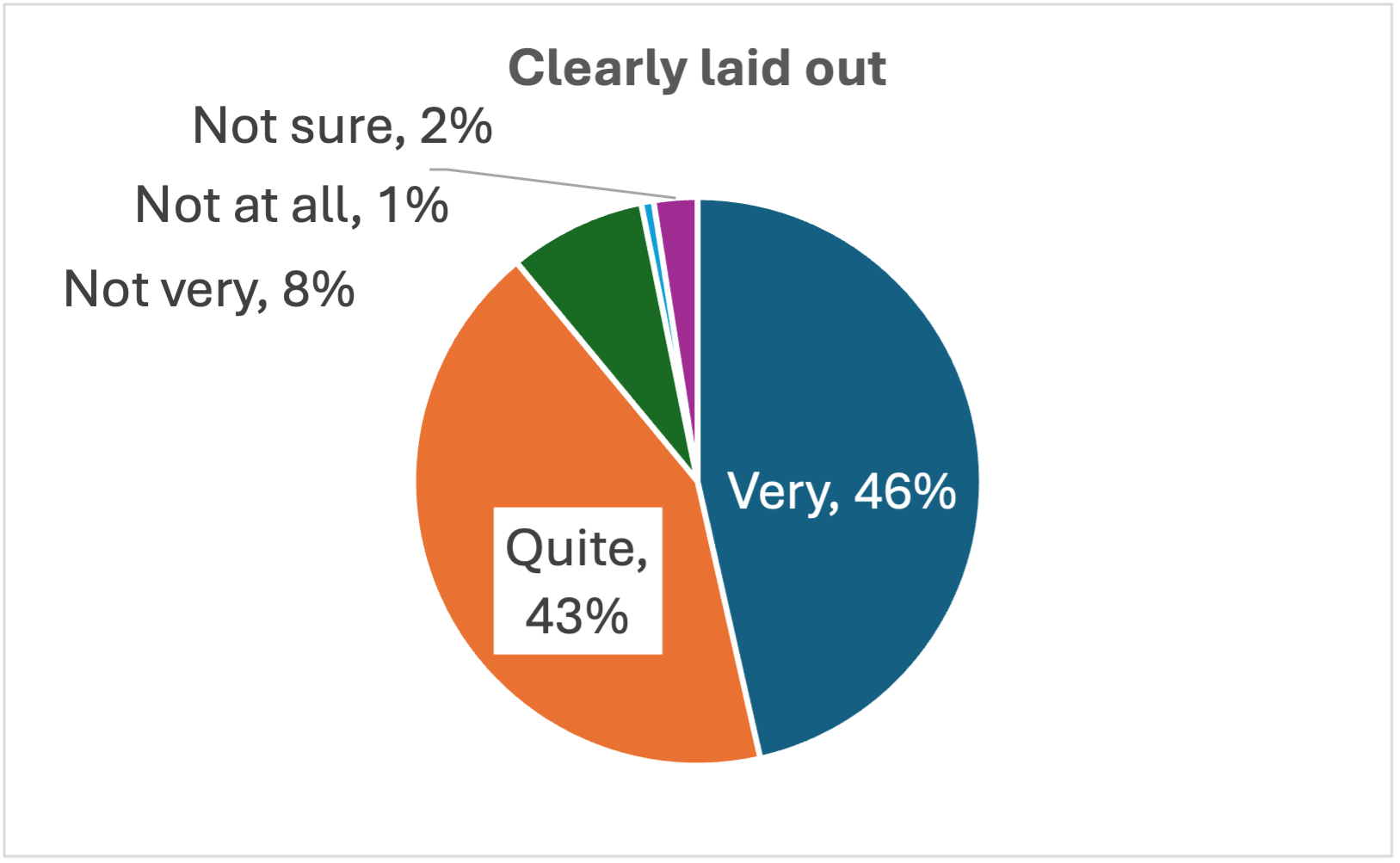
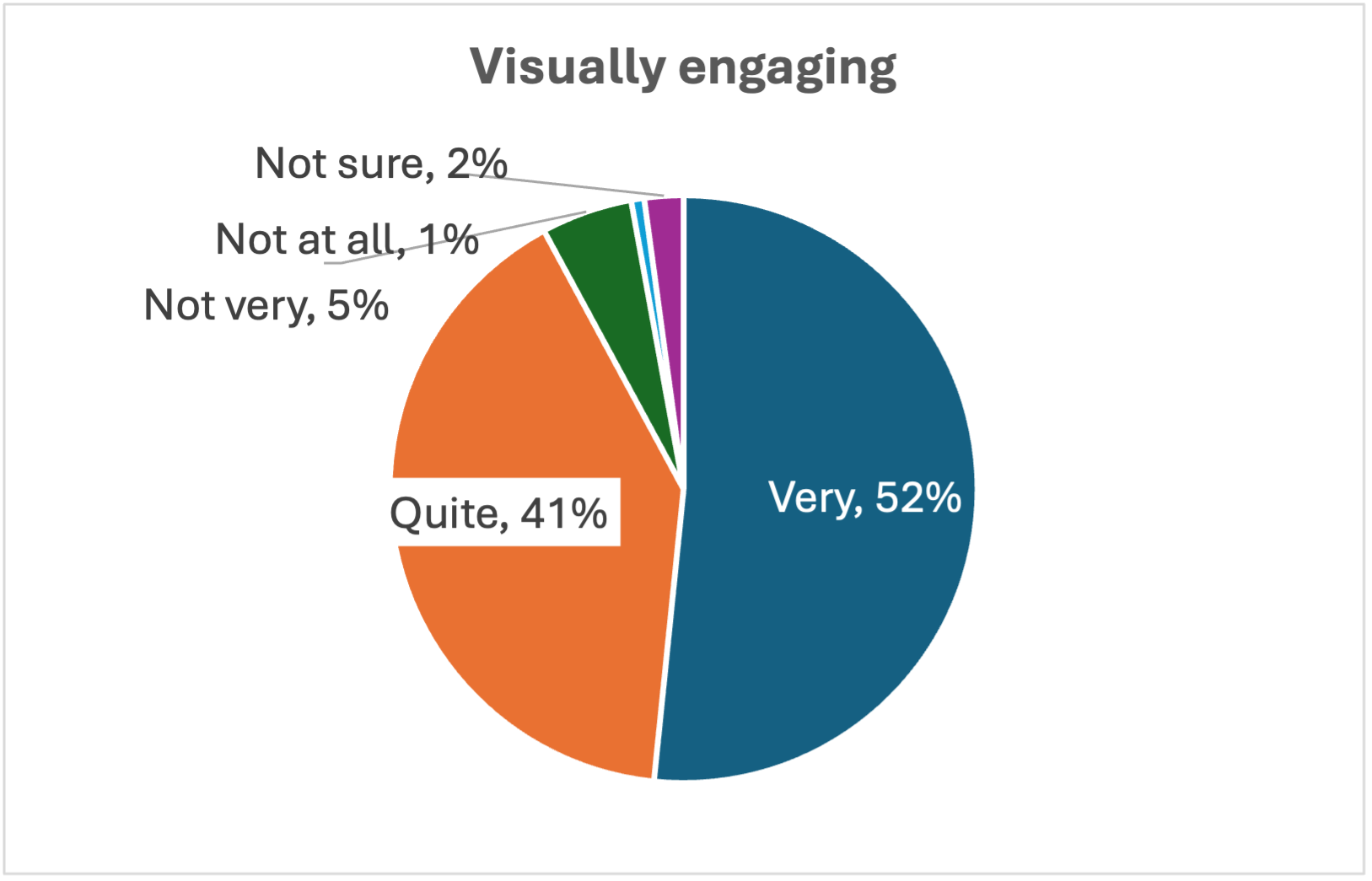
Sample of comments on format and legibility:
- "Well done to all involved. Really great document and map."
- "Too long, overwhelming and complicated!"
- "My only feedback is that the document isn't so easy to read on a mobile device, which a lot of our charity volunteers and visitors have as their only digital device"
- "The strategy is well informed, considered and presented"
- "Add an executive summary as the documents are very lengthy"
- "Very comprehensive but requires clearer summaries"
- "It was a very interesting read and very informative. However I have a background in this sort of work and continue to volunteer in the field. For those without my background it may appear overlong and difficult to digest however."
Feedback on key components of the LNRS
Description and principles
- 68% felt the Description effectively set the scene for Sussex's current land use, condition of its natural environment and the pressures it faces. 24% felt it partially did so. 6% weren't sure. 2% said No.
- 77% felt the seven Principles helped them understand the issues impacting nature in Sussex and how we might respond to them. 17% felt they partially did so. 3% weren't sure and 3% said No.
Priorities and Measures (measures are the actions that can be taken to deliver the priorities)
- 59% felt the 24 Priorities captured everything they feel strongly about, 25% felt they partially did so. 7% weren't sure. 5% said No.
- 63% felt the 106+ Measures were generally written in a way that feels practical and easy to follow for those who might want to implement them. 25% felt they partially did so. 8% weren't sure. 4% said No.
Species
- 64% agreed that the list of Prioritised Species is right. 15% felt it is partially right. 14% weren't sure and 7% said no.
- 60% agreed the Species Measures were right. 21% felt they were partially right. 17% weren't sure and 2% said no.
Local Habitat Map
- 52% found the Local Habitat Map easy to use and navigate. 31% said partially. 13% said no and 4% weren't sure
- 51% agreed that where measures were mapped to land they owned, managed or advised on, this would help support the planning, designing or seeking of funding for nature's recovery. 39% didn't know or weren't sure. 10% said no.
Sample of comments on the key components of the LNRS:
- "We commend the authors of the consultation document on the excellent analysis in Part 1 about the state of nature in our county."
- "No mention of marine environment"
- "Lowland Heath mentions the Dartford Warbler and Nightjar but does not mention plants without which there would be no lowland heath"
- "Principle 7 should move higher up - bringing Nature into everyday life to help everyone understand the issues impacting nature."
- "The 24 priorities are well thought out and link well to the 7 principles."
- "Bio-bead pollution and plastic pellet pollution more broadly are missing. These represent major risks to local ecosystems and huge clean up operations for local authorities."
- "No measure on light pollution"
- "Priority W1.1 Deer management is not always popular but it is vital both for deer welfare and to safeguard existing and newly established woodland."
- "Priority SWB1: We strongly support this priority. It is essential that habitat creation for lepidoptera is included as an integral feature in all new development. This could take the form of butterfly banks & butterfly/moth gardens meadows"
- "More emphasis on managing hedgerows for nature is required, they are a huge but increasingly-damaged resource."
- "Priority U2 is welcome in principle with regard to swift bricks and artificial nest cups; however, please include text from national planning guidance NPPG Natural Environment 2025 paragraph 017"
- "Include measures for reptiles and amphibians - pond creation, hedge creation for connectivity, grassland restoration, hibernacula, basking areas, etc"
- "With regards to bees, East Sussex is the stronghold for Osmia pilicornis, which could be on the priority list too."
- "We found the mapping quite hard to access as we are mostly non professionals and needed a lot of peer support to get going."
Impact and future use
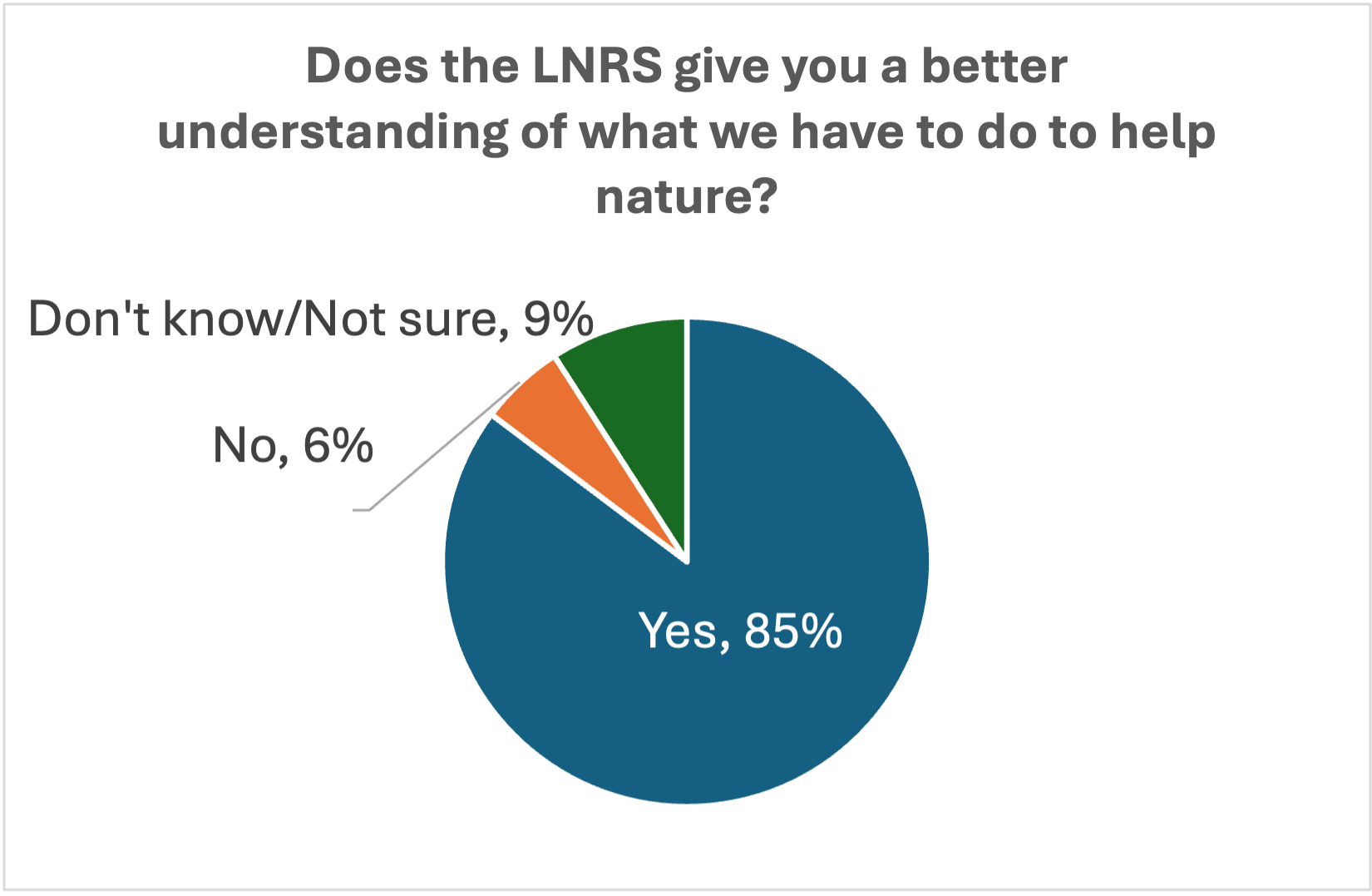
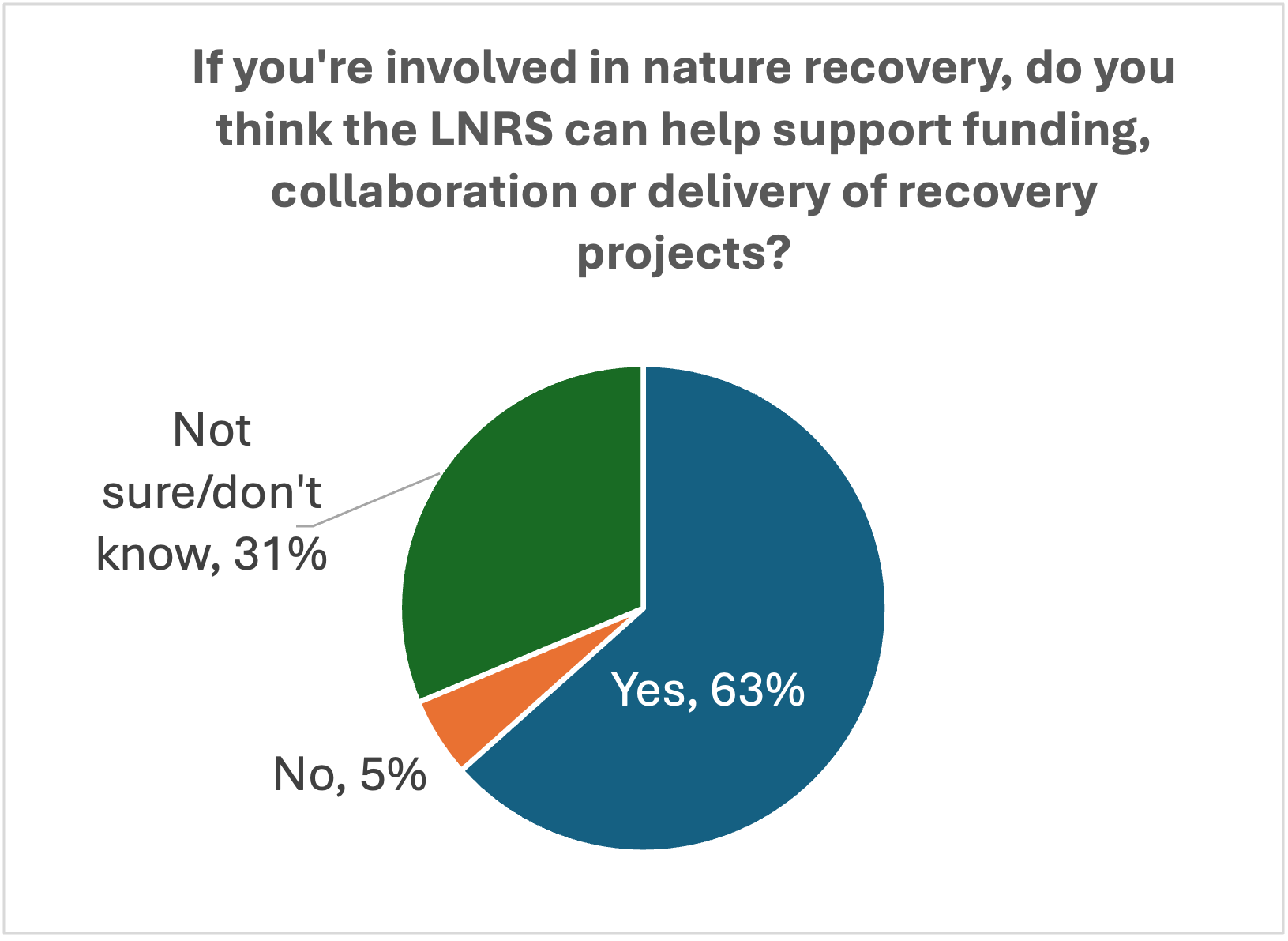
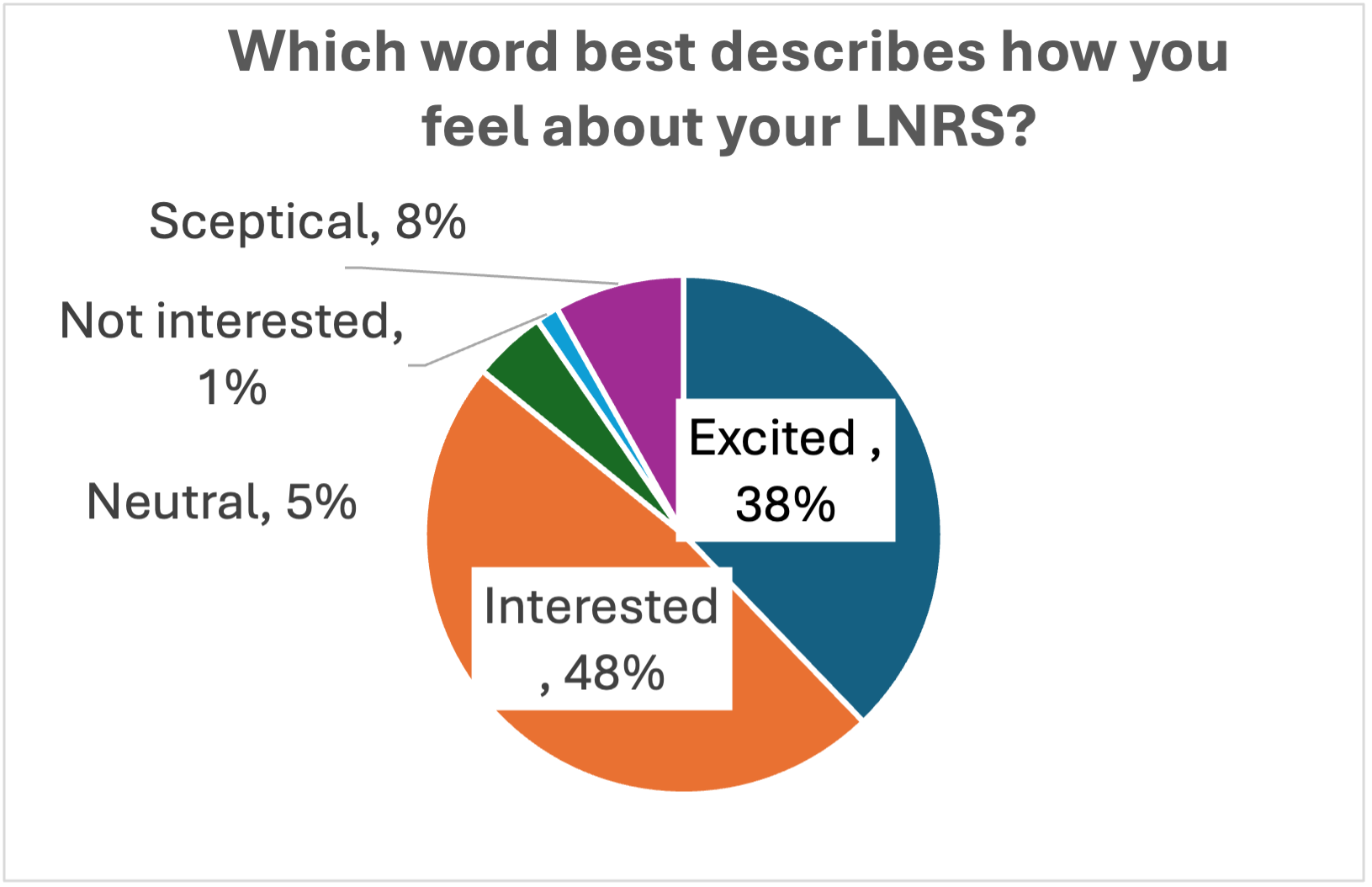
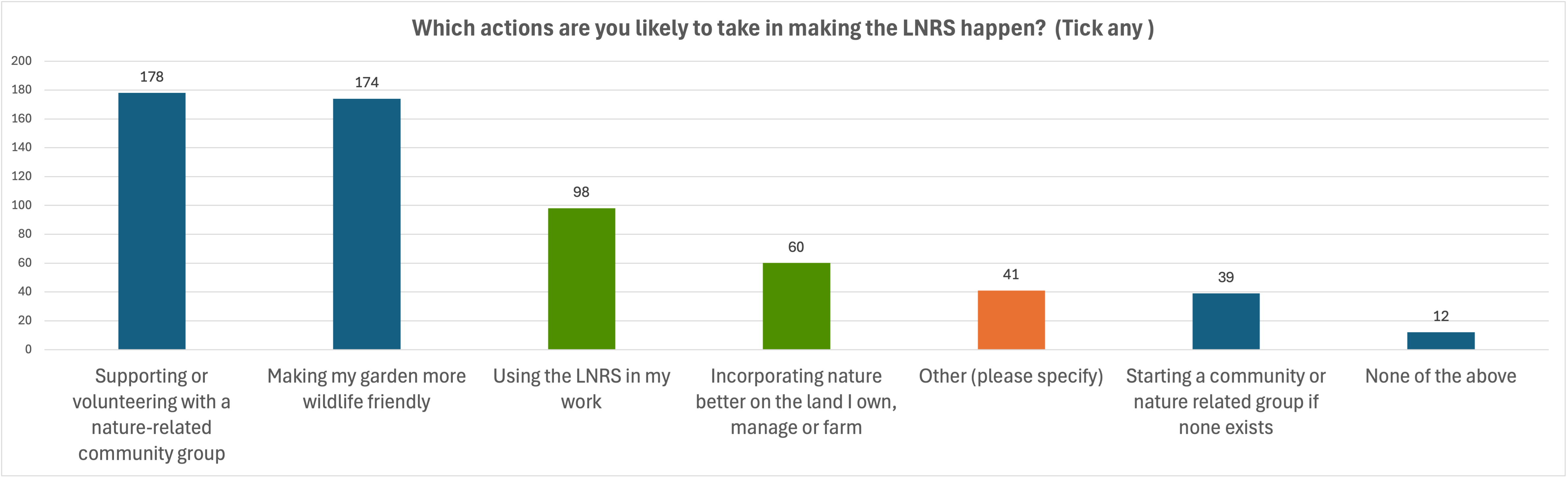
How respondents feel about the LNRS, whether they think it can help support nature recovery in practical ways, and what action they will personally take towards its aims.
Sample of comments on impact and future use:
- "There seems, at last, a real focus on what we have to do to try and protect nature."
- "Be clear about how they are to be funded. No measures are sustainable without long term funding mechanisms and landowners with the right values who will uphold the measures"
- "It functions well as a resource. It needs a coordinated approach for implementation locally."
- "It is important work but we are not yet fully clear on how it will work in practice and how it will guide future Development and BNG areas in our village"
- "This is the most comprehensive strategy I have seen and gives hope that it will be actioned."
- "A lot to do and concerned about where the funding and resource is going to come from to enable this. i.e. turning the plan into action"
- "Funding for implementation is key, along with the need for a clear delivery plan that turns ambition into action and helps to drive nature’s recovery forward’
- "How will these priorities be monitored?
- "There is a major problem in Building on land, And also on many current farming methods. It is maybe too polite!"
- "It is great to see the information laid out and all of the good thinking in place but i wonder how we can be supported in actually implementing it."
- "I'm excited that the LNRS may nudge some of this forward and that it is being done in terms of landscape scale thinking and that everyone can play their part to connect across the county and beyond."
- "There will be some issues that landowners and farmers need further help to implement these changes."
- "The LNRS sets out an inspiring and coherent vision for how trees and woodland can be protected, restored and reconnected as part of wider landscape scale nature recovery across West Sussex."
- "I would love to participate to a workshop online/webinar to better understand it."
- "Just to make some of this important information easy to access and use for individuals and community groups so everyone feels they can take action to support nature recovery at whatever scale"
Read the draft LNRS
While the consultation has closed, you can review the draft LNRS documents and Local Habitat Maps on our publications page. Amended versions of these, taking on board the comments received through the public consultation (such as those above), will be published in 2026, with the changes outlined in the two consultation reports to be shared in February.
Main photo: Wet Ancient Woodland & Wild Garlic - West (Billingshurst) © Ben Rainbow
